

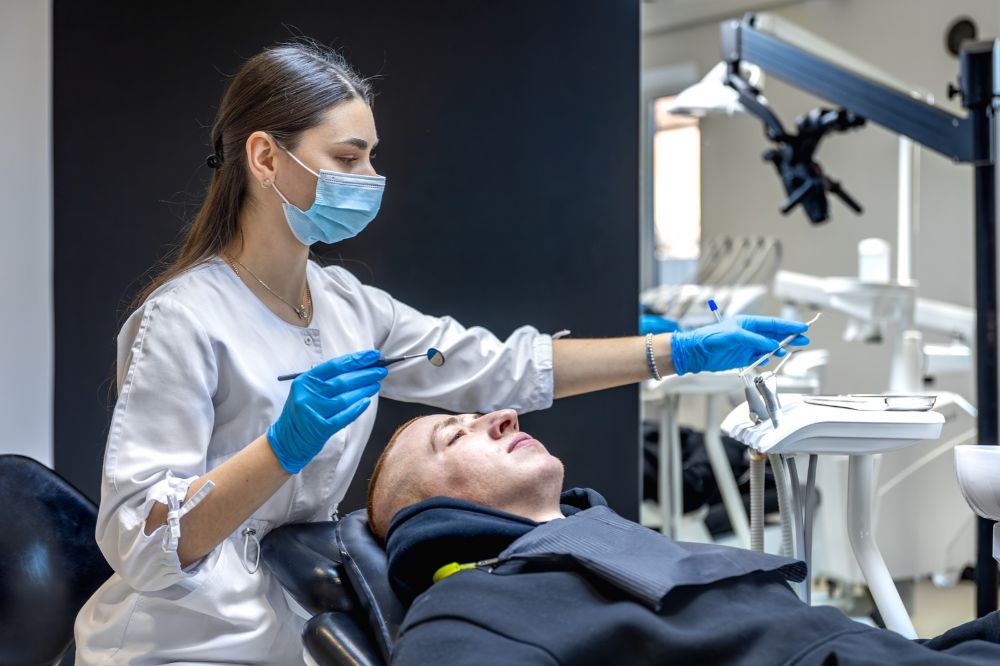
An oral cancer screening is a quick, painless check of your mouth, lips, tongue, and throat. Your dentist looks and feels for changes that may need a closer look. Most adults are checked during regular dental visits, often once a year, though your dentist may suggest a different schedule. If you are searching for a dentist in NE Calgary, you can ask whether this check is part of your routine exam.
What Is an Oral Cancer Screening?
A screening is a simple health check. It does not give a final diagnosis. Its job is to spot anything unusual early, so it can be looked at more closely if needed.
Here is what makes it easy:
- It usually takes only a few minutes.
- It needs no needles in most cases.
- It is often done during a normal checkup.
Many clinics offer an oral cancer screening near you as part of a routine visit, so you may not need a separate appointment.
What Gets Checked During the Exam?
Your dentist checks more than your teeth. The mouth has many soft areas where changes can hide. Most spots turn out to be harmless, like a small injury or an irritated patch.
Areas Your Dentist Looks At
| Area | What the Dentist Looks For |
| Lips | Sores, cracks, or colour changes |
| Cheeks (inside) | White or red patches, lumps |
| Tongue (top and sides) | Rough spots, swelling, sores |
| Floor of the mouth | Lumps or unusual colour |
| Roof of the mouth | Patches or sore areas |
| Gums | Swelling or sores that look unusual |
| Throat and neck | Lumps or tender spots |
Many people type “What does an oral cancer screening check for?” into their phone before a visit. The short answer is this: your dentist looks for sores, patches, lumps, and colour changes that do not look normal.
How the Visit Usually Goes
- Your dentist asks about your health and habits.
- They look inside your mouth with a light.
- They gently feel your jaw, cheeks, and neck.
- They may ask you to stick out your tongue.
- They tell you what they see and explain any next steps.
What If Something Looks Odd?
Do not panic. Your dentist may ask you to come back in a couple of weeks to see if the spot heals. If it stays, they may suggest a small test or send you to a specialist. Only a lab test of a tissue sample can confirm what a spot really is.
Who Has a Higher Chance of Mouth Cancer?
Anyone can develop changes in the mouth. Still, some things may raise the chance.
- Smoking or chewing tobacco
- Heavy alcohol use
- Past infection with HPV (a common virus)
- Too much sun on the lips
- Being over 40
- A family history of mouth or throat cancer
Having one of these does not mean you will get cancer. It simply means your dentist may want to look a little more closely or more often.
How Often Should You Get Checked?
Many people ask, “How often should I get screened?” For most adults, a check at each regular dental visit is a common approach. That is often once or twice a year.
Your own schedule can differ. Here is a general guide:
| Your Situation | Common Schedule |
| Healthy adult, no risk factors | At regular checkups, often every 6 to 12 months |
| Tobacco or heavy alcohol use | Your dentist may suggest more frequent checks. |
| Past mouth or throat concerns | As advised by your dentist or doctor |
| Spot that has not healed | Book a visit soon; do not wait for your next checkup. |
Guidelines can vary, so it is best to ask your dentist what fits your health. They know your history and can plan around it.
Warning Signs to Watch For at Home
You do not need to wait for a checkup if something feels wrong. Book a visit if you notice any of these for more than two weeks:
- A sore that will not heal
- White or red patches
- A lump or thick area in the mouth or neck
- Pain or numbness in the mouth or lips
- Trouble chewing, swallowing, or moving your tongue
- A hoarse voice that does not go away
- A tooth that feels loose for no clear reason
Many of these have simple causes. Still, it is wise to get them looked at.
Finding the Right Place for Your Check
Convenience matters. It is much easier to keep up with visits when the clinic is close to home or work. If you live or work on the northeast side of the city, asking about an oral cancer screening in NE Calgary can help you find a clinic that fits your routine.
Simple Questions to Ask Before You Book
- Is the check included in a regular exam?
- How long will the visit take?
- What happens if something unusual is found?
Booking with a dentist near you also makes it easier to return for follow-ups if you need them.
Easy Habits That Support a Healthy Mouth
Screening is most efficient with good daily care.
- Brush your teeth two times and floss once daily.
- Don’t use any type of tobacco.
- Cut down on alcohol.
- When outdoors, use lip balm with SPF.
- Consume fruits and vegetables in abundance.
- Take a quick look at yourself in the mirror monthly.
A Few Minutes Now, Clearer Answers Later
At Saddlestone Dental, our team believes regular checkups are a calm, simple way to look after your health. We take time to explain what we see and answer your questions in plain words. If it has been a while since your last visit, or you have noticed something that worries you, we welcome you to book an appointment. You are always free to ask questions.
Frequently Asked Questions
Does the dental examination hurt?
No, it usually just feels like a tap-like pressure.
Can a dentist diagnose cancer during the exam?
No, but only a lab test will be able to confirm an actual diagnosis; however, your dentist will be able to see some changes.
Do young people need this check too?
Yes, it is often part of a regular exam at any adult age.
Should I stop eating or drinking before the exam?
No, but brushing your teeth beforehand helps your dentist see clearly.